The competitive intelligence tools market is booming. Analysts project it will nearly double by 2032, and new platforms launch every month. More options should mean better choices. Instead, many teams face analysis paralysis—overwhelmed by enterprise giants they can’t afford and budget tools that don’t deliver.
This guide maps the current landscape and helps you find what actually fits your team’s needs.
The Competitive Intelligence Tools Landscape
Enterprise Platforms
Tools like Crayon , Klue, AlphaSense, and Kompyte represent the enterprise tier. They offer comprehensive competitor monitoring, automated battlecards for sales teams, and deep integrations with CRM systems like Salesforce and HubSpot.
These platforms deliver real results. Crayon users report 30% reduction in research time. Klue users see 25% higher competitive win rates. The capabilities are impressive.
The reality check: implementation takes 1-6 months. Pricing starts around $1,000/month and scales quickly. These tools assume you have a dedicated competitive intelligence function—or at least someone whose primary job is managing the platform.
Digital and SEO Intelligence
Semrush, Ahrefs, and Similarweb dominate digital competitive analysis. They excel at traffic benchmarking, keyword gap analysis, and understanding competitors’ digital marketing strategies.
For marketing teams focused on SEO and paid search, these tools are invaluable. But they answer a narrow set of questions. They won’t tell you about a competitor’s product roadmap, pricing strategy shifts, or organizational changes signaled by hiring patterns.
Media and Social Monitoring
Meltwater and Brandwatch offer powerful media intelligence. They track brand mentions, news coverage, and social sentiment across massive global databases.
These platforms shine for PR teams and brand managers. The gap: they’re not designed for product managers tracking feature releases or strategists mapping market positioning. The insights skew toward reputation and awareness rather than competitive strategy.
Point Solutions and Budget Options
BuiltWith analyzes competitor technology stacks—useful for sales teams and developers. Competitors App offers basic tracking starting at $14.95 per competitor monthly. Various free tools provide limited snapshots.
These entry points keep costs low. The trade-off is narrow focus. You’ll need multiple tools to build a complete picture, and stitching insights together becomes your job.
The Hidden Cost of Complexity
Implementation Timelines
Enterprise platforms promise comprehensive intelligence. Delivering on that promise takes time. Setup, integration, training, and workflow optimization stretch across months. Many organizations buy powerful tools that become “shelfware”—purchased but never fully adopted.
If your competitive landscape shifts faster than your implementation timeline, you have a problem.
The Multi-Tool Trap
Industry analysts note that one tool rarely covers market share analysis, tactical insights, sales enablement, and content planning equally well. Many teams end up subscribing to 3-4 specialized tools.
Each tool means another dashboard, another login, another learning curve. Context switching burns time. Insights fragment across platforms. The comprehensive view you need requires manual assembly.
Who These Tools Are Built For
Most competitive intelligence platforms target one of two buyers: large enterprises with dedicated CI teams, or agencies with technical resources to manage complex tooling.
They’re not built for the marketing manager who also handles product positioning. Not for the founder who needs strategic intelligence alongside operational insights. Not for the small team where everyone wears multiple hats.
What Growing Teams Actually Need
One Person, Multiple Perspectives
In small teams, roles blur. You’re a strategist in the morning call, a marketer drafting messaging after lunch, and advising on product direction by end of day. You don’t need three different tools for three different hats.
You need one complete view of your competitive landscape that you can examine from different angles. The same underlying intelligence, surfaced differently depending on which question you’re asking. Strategic positioning insights when you’re planning. Messaging opportunities when you’re writing. Feature gaps when you’re prioritizing.
Juggling multiple dashboards or manually stitching reports together isn’t just inefficient—it means insights fall through the cracks.
Insights Tailored to Your Context
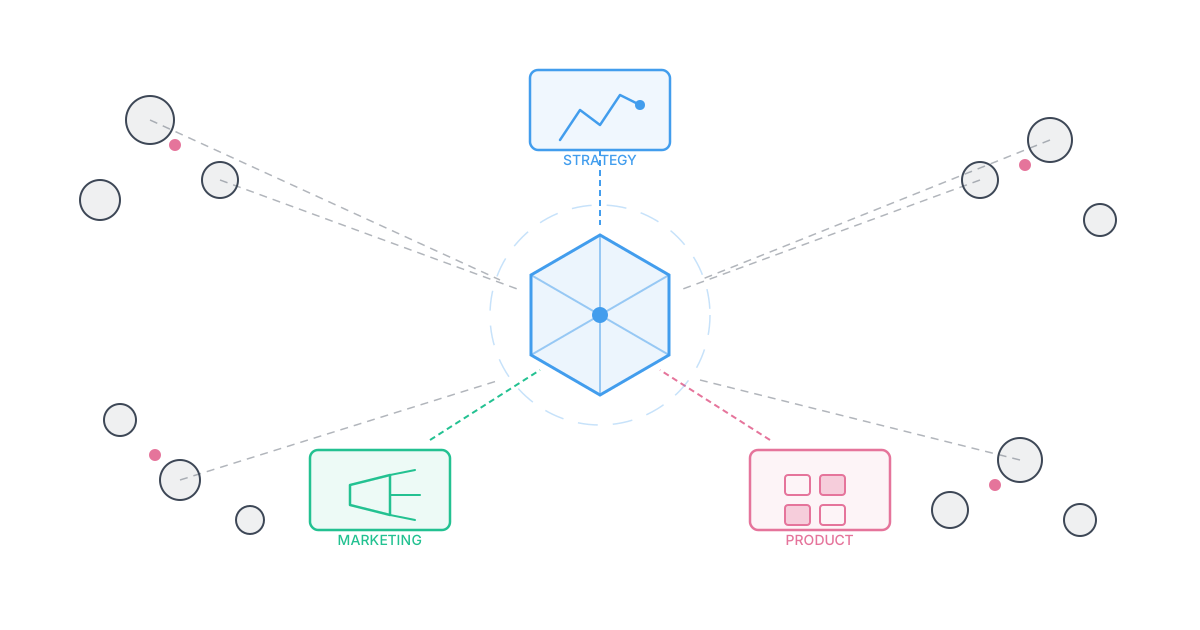
Different roles benefit from competitive intelligence differently . Marketing needs campaign tracking and messaging analysis. Product needs feature monitoring and roadmap signals. Strategy needs landscape mapping and early warning indicators.
The best tools recognize this. They don’t force everyone into the same view. They adapt to how you’re using the intelligence right now—even if that changes hour to hour.
Speed to Value
Enterprise implementation timelines assume you can wait months for value. Growing teams can’t. By the time a complex platform is fully deployed, your competitive situation has evolved.
Look for tools that deliver insights in hours, not months. No complex onboarding. No technical setup requiring IT involvement. Start understanding your competitive landscape today.
Human Support When You Need It
Documentation and chatbots only go so far. When you’re trying to understand what a competitor’s moves mean for your specific situation, you need people who understand competitive intelligence—not just the software.
Personal support matters. Someone who knows your use case. Someone who can help you extract maximum value without becoming a full-time platform administrator.
Choosing the Right Tool for Your Team
Enterprise platforms have their place. If you have a dedicated CI function, complex sales cycles requiring battlecards, and budget for comprehensive tooling, they deliver real value.
But most growing teams are over-served by that complexity. They don’t need every feature—they need the right insights, accessible quickly, without a steep learning curve.
The best competitive intelligence tool is one you’ll actually use consistently. Not the one with the longest feature list. Not the one that requires months to implement. The one that fits how your team actually works.
Competition Compass is built for small teams wearing multiple hats. Whether you’re focused on strategy, marketing, or product—or all three before lunch—you get a complete view of your competitive landscape from every angle that matters.
No complex implementation. No enterprise pricing. No waiting months for value.
And when you need help, you get personal support from people who understand competitive intelligence—not just ticketing systems and chatbots.