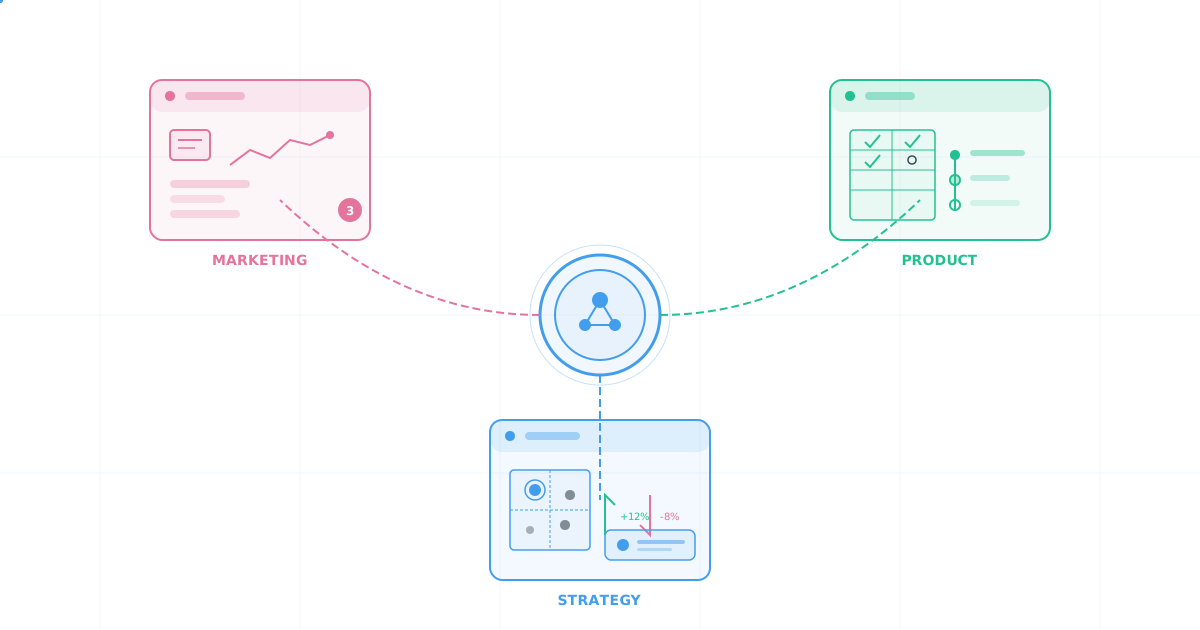
Different roles benefit from competitive intelligence, albeit in slightly different ways. A marketeer tracking competitor campaigns needs different insights than a product manager monitoring feature releases or a strategist mapping market dynamics.
You could ask ChatGPT to analyze a competitor’s website. You could build custom workflows in n8n or assemble complex agentic pipelines. But generic AI chats lack domain expertise and persistent monitoring. DIY automation platforms require significant technical investment and ongoing maintenance. Neither approach delivers role-specific insights out of the box.
Specialized AI-augmented solutions for competitive intelligence bridge this gap. They combine the automation power of DIY platforms with domain expertise baked in—delivering tailored insights for marketing, product, and strategy teams without requiring you to build and maintain the infrastructure yourself.
This article explores how these specialized tools amplify three key roles differently, with practical workflow examples for each.
Why Role-Specific Competitive Intelligence Matters
The One-Size-Fits-All Problem
Traditional competitive intelligence treats all consumers of intelligence the same. Everyone receives the same reports, the same alerts, and the same dashboards. This creates two problems.
First, information overload. Product managers wade through marketing campaign data they don’t need. Marketers scroll past technical feature comparisons. Strategists miss high-level signals buried in operational details.
Second, missed opportunities. When intelligence isn’t tailored to a role’s specific decisions, critical insights get overlooked. Generic tools—whether chat-based AI or custom-built pipelines—don’t understand the context of each role’s decisions.
How Specialized Tools Deliver Tailored Insights
Specialized competitive intelligence platforms solve this by delivering role-specific insights . A product manager and a marketeer receive different, relevant competitive intelligence without manual filtering. Customized reporting ensures relevance and actionability for each role.
The four-layer technology stack—automated collection, structured organization, AI pattern recognition, and human interpretation—works the same way for everyone. But the outputs adapt to each role’s needs. This is the difference between a general-purpose tool and a specialized solution.
Amplifying Marketing Teams
What Tools Handle
For marketing teams, specialized tools continuously monitor competitor content strategies, track campaign launches across channels, analyze messaging shifts, and measure social media sentiment. According to industry research , essential capabilities include detecting shifts in customer sentiment across review sites and social media, analyzing competitive pricing models, and surfacing market trends.
This automation handles the tactical work of tracking what competitors are saying and how audiences respond—work that would consume hours of manual effort daily.
What Marketers Focus On
With monitoring automated, marketers focus on differentiation strategy, creative positioning, brand storytelling, and audience engagement. Instead of tracking competitor campaigns manually, you analyze patterns in their messaging and develop creative approaches that stand apart.
When tools surface that three competitors shifted messaging toward “enterprise security” this quarter, you interpret the pattern. Is this responding to market demand or trying to create it? Should you match this messaging, differentiate against it, or ignore it? Your creative strategy is informed by comprehensive intelligence but driven by marketing expertise.
Practical Workflow Example
Monday morning: Tools alert you that Competitor A launched a new campaign emphasizing sustainability messaging—a departure from their usual technical focus.
Your response: You don’t spend hours confirming this shift. Instead, you analyze whether this signals a broader market trend, assess how your brand’s existing sustainability story compares, and brief your content team on potential positioning opportunities—all before lunch.
Amplifying Product Teams
What Tools Handle
For product teams, specialized tools track features across competitors, monitor product roadmap signals through job postings and patent filings, aggregate customer feedback about competing products, and analyze pricing strategy changes. Product management best practices emphasize documenting both direct and indirect competitors—specialized tools make this systematic rather than sporadic.
The system maintains living competitive analysis rather than static quarterly decks.
What Product Managers Focus On
With tracking automated, product managers focus on prioritization decisions, innovation opportunities, and user experience differentiation. You analyze competitive positioning and identify opportunities to differentiate or leapfrog rather than manually researching competitor features.
As one Chief Product Officer notes , “Your customers shouldn’t get to the point of demanding features or leaving for a competitor. You should be using research to intuitively meet those needs before dissatisfaction grows.” Automated competitive intelligence enables this proactive stance.
Practical Workflow Example
Weekly product review: Your dashboard shows Competitor B added three features your customers have requested. But it also shows their implementation received mixed reviews citing complexity.
Your response: You don’t scramble to copy features. Instead, you design a simpler approach addressing the same underlying need, using competitor missteps as learning opportunities. You prioritize with confidence, knowing the full competitive context.
Amplifying Strategy Teams
What Tools Handle
For strategy teams, specialized tools analyze market trends, map the competitive landscape comprehensively, benchmark performance across competitors, and surface early warning signals of competitive moves. AI-powered platforms can forecast potential competitor actions by analyzing historical data and current market dynamics.
This systematic intelligence gathering replaces fragmented research and outdated industry reports.
What Strategists Focus On
With landscape monitoring automated, strategists focus on scenario planning, competitive response strategies, long-term positioning, and resource allocation. You develop strategies knowing the full landscape rather than compiling data.
Strategic judgment remains irreplaceable. You recognize emerging threats from outside the traditional competitive set. You understand which competitor moves warrant response and which are distractions. You make the calls that shape competitive positioning.
Practical Workflow Example
Quarterly planning: Tools identify early signals that a major competitor is preparing to enter a new market segment—hiring patterns, partnership announcements, and content shifts all pointing the same direction.
Your response: You don’t wait for their public announcement. You develop response scenarios: accelerate your own entry, fortify your position, or concede the segment and focus elsewhere. Your strategic planning gains months of lead time.
Cross-Functional Intelligence Sharing
Breaking Down Silos
Role-specific intelligence becomes more powerful when shared across functions. Best practices recommend collaborating cross-functionally and documenting findings in central locations that all teams can access.
When marketing spots a competitor’s messaging pivot, product teams should know. When product identifies a feature gap, strategy teams need that input for resource allocation. When strategy detects an emerging threat, everyone needs to prepare.
Creating a Central Intelligence Hub
Specialized platforms enable centralized intelligence hubs with role-specific views. Everyone accesses the same underlying data but sees it organized for their decisions. Marketing dashboards emphasize campaign and messaging intelligence. Product dashboards highlight feature and pricing changes. Strategy dashboards surface market trends and early warning signals.
The result is aligned, data-driven competitive response across the organization.
Conclusion
Different roles benefit from competitive intelligence differently. Marketing teams amplify creative strategy with automated campaign and sentiment monitoring. Product teams amplify prioritization decisions with systematic feature and feedback tracking. Strategy teams amplify long-term positioning with comprehensive landscape intelligence.
Generic AI chats and DIY automation platforms can’t match this. Specialized solutions—with role-specific outputs built on shared underlying intelligence—deliver far more value than one-size-fits-all approaches.
Competition Compass combines automated monitoring, AI-powered insights, and role-specific dashboards designed to amplify each team’s competitive analysis expertise. Discover how tailored intelligence can transform your marketing, product, and strategy decisions.