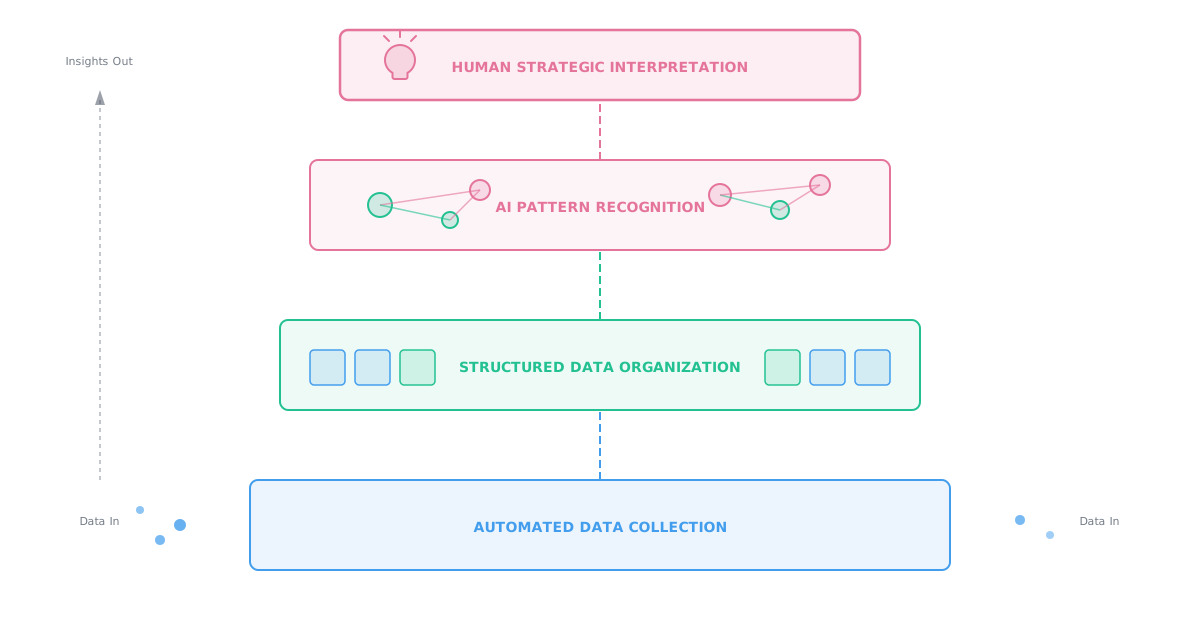
Making automated, AI-augmented competitor research work requires a complete technology stack—not just one element. Many organizations focus on AI alone, expecting it to transform their competitive intelligence overnight. But AI without the supporting layers underdelivers, leaving teams frustrated and no better informed than before.
The technology stack that enables true amplification has four essential layers, each building on the one before it. Remove any layer, and the system degrades. Understanding this architecture helps you evaluate tools, set realistic expectations, and build competitive intelligence capabilities that actually deliver strategic value.
Layer 1: Automated Data Collection
The foundation of any effective competitor research stack is automated data collection. This layer continuously gathers information from competitor websites, pricing pages, content updates, job postings, and other public sources.
What It Does
Automated collection replaces periodic manual checking with continuous monitoring. Instead of visiting competitor websites weekly or monthly, the system tracks changes as they happen. When a competitor updates their pricing, launches a new feature, or publishes new content, the data collection layer captures it.
This layer monitors multiple source types: website changes, social media activity, news mentions, job postings that signal strategic direction, and customer review patterns. The breadth of coverage would be impossible to achieve manually.
Why It Matters
Comprehensive coverage is the first requirement for useful competitive intelligence. Tracking ten competitors across twenty data points means monitoring 200 sources regularly. As your competitive set grows, manual monitoring becomes impractical.
Automation also shifts your posture from reactive to proactive. Instead of discovering competitor moves weeks later during quarterly reviews, you learn about changes when they happen—giving you time to respond strategically.
Layer 2: Structured Data Organization
Raw data alone creates more problems than it solves. The second layer transforms collected information into organized, queryable intelligence.
What It Does
This layer structures data consistently across competitors, tracks changes over time, and creates comparison views. Instead of scattered notes and outdated spreadsheets, you have a unified view of the competitive landscape.
Structured organization enables historical tracking. You can see not just what competitors offer today, but how their offerings have evolved. Price changes, feature additions, messaging shifts—all become visible patterns rather than isolated observations.
Why It Matters
Raw data overwhelms. Structured data informs. Without organization, the volume of collected information becomes a liability rather than an asset. Teams drown in alerts and updates without gaining strategic clarity.
Historical context reveals patterns that point-in-time snapshots miss. A single price change might mean nothing. Three price changes in two months might signal a strategic pivot. Structured data makes these patterns visible.
Layer 3: AI-Powered Pattern Recognition
The third layer is where AI adds unique value. Pattern recognition analyzes organized data to identify trends, anomalies, and correlations that humans would miss when processing large volumes manually.
What It Does
AI examines data across competitors and time periods to surface meaningful signals. It identifies correlations—like a competitor increasing engineering job postings while simultaneously shifting blog content toward a new topic area, suggesting a strategic pivot before any public announcement.
Pattern recognition also spots anomalies that warrant attention. Unusual activity patterns, sudden changes in competitor behavior, or emerging trends across multiple competitors become visible signals rather than buried data points.
Why It Matters
The shift from information to insight happens at this layer. Research shows AI can surface strategic signals from aggregate data that individual observations would miss. You’re not just collecting facts about competitors—you’re understanding what those facts mean.
AI excels at connecting dots across large datasets. Patterns spanning months of data and dozens of competitors would take humans weeks to identify manually. AI surfaces them in moments, letting you focus on interpretation rather than detection.
Layer 4: Human Strategic Interpretation
The final layer is irreplaceable: human strategic interpretation. This is where competitive intelligence becomes competitive advantage.
What It Does
Humans apply industry context that no algorithm possesses. You understand the nuances of your market, the history behind competitor decisions, and the strategic implications of observed patterns. When AI surfaces a signal, you determine what it means for your specific situation.
This layer translates patterns into decisions. Knowing that a competitor is pivoting is information. Deciding how to respond—whether to counter, ignore, or accelerate your own plans—is strategy.
Why It Matters
As competitive intelligence experts emphasize , tools provide intelligence but humans create advantage. AI can identify that something is happening. Only humans can determine why it matters and what to do about it.
Strategic judgment remains irreplaceable. You recognize emerging threats from outside the traditional competitive set. You understand which competitor moves warrant response and which are distractions. You make the calls that shape competitive positioning.
Why the Complete Stack Matters
Each layer builds on the previous one. Automated collection feeds structured organization. Organized data enables pattern recognition. Patterns inform human interpretation. The system works as an integrated whole.
Remove any layer, and effectiveness degrades significantly:
- Without automated collection, you lack comprehensive data. AI analyzes incomplete information, missing critical signals.
- Without structured organization, raw data overwhelms. Pattern recognition has nothing coherent to analyze.
- Without AI pattern recognition, humans must manually process volumes of data—returning to the time-consuming work the stack was meant to eliminate.
- Without human interpretation, patterns remain observations rather than strategies. Intelligence never translates into action.
The sum is greater than the parts. Companies using complete competitive intelligence stacks are 2.5 times more likely to outperform peers , not because any single layer is magic, but because the layers amplify each other.
Evaluating Your Technology Stack
When assessing your current tools or evaluating new solutions, ask these questions:
Data Collection: Does the solution monitor competitors continuously? What sources does it track? How comprehensive is the coverage?
Organization: How is competitive data structured? Can you track changes over time? Can you compare across competitors easily?
Pattern Recognition: Does the system surface insights, or just collect data? Can it identify trends and anomalies automatically?
Human Integration: Does the tool support strategic interpretation? Can you add context, notes, and analysis? Does it fit your decision-making workflow?
Signs of an incomplete stack include: manual data entry requirements, static reports without historical tracking, data without analysis, or AI insights without context for interpretation.
Conclusion
Effective competitor research technology isn’t about any single capability—it’s about four layers working together. Automated collection provides comprehensive data. Structured organization makes that data usable. AI pattern recognition surfaces insights humans would miss. Human interpretation translates insights into strategic advantage.
When evaluating tools for competitive intelligence, look beyond individual features to assess the complete stack. The technology that enables amplification is the technology that integrates all four layers seamlessly.
Competition Compass brings these layers together in one platform—automated monitoring, structured competitive data, AI-powered insights, and intuitive interfaces designed for strategic thinking. Discover how a complete technology stack can amplify your competitor research.