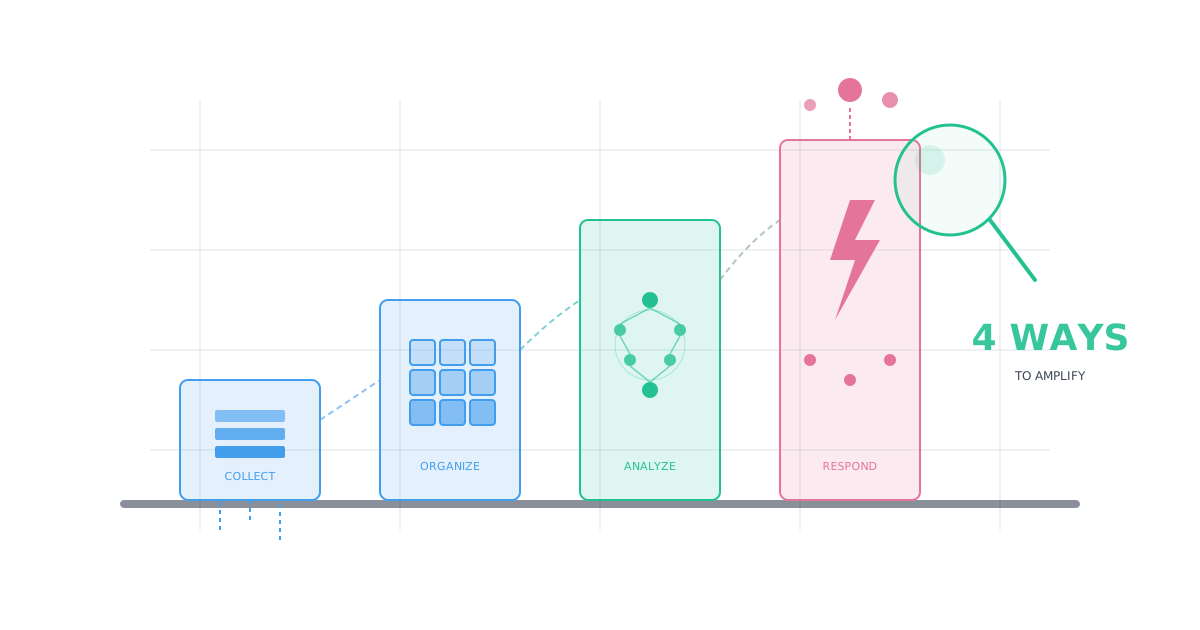
You understand that AI-supported tools amplify rather than replace competitive analysis expertise. You know the four-layer technology stack that makes this possible. But how does amplification actually work in practice?
This article examines four concrete ways modern tooling transforms your competitive analysis workflow—each a distinct amplification effect where your expertise becomes more impactful with the right technology support.
1. Automating Data Collection Across Multiple Sources
What modern tooling does: Continuously tracks competitor websites, pricing changes, content updates, social media activity, job postings, and customer reviews. This monitoring runs 24/7 with comprehensive coverage no human team could match manually.
What you gain: Complete visibility without hours of searching. When a competitor changes pricing or launches a feature, you know immediately—not weeks later during quarterly reviews.
Your amplified contribution: You define what to monitor and determine which changes warrant strategic attention. Tools detect every change; you decide which ones matter. This judgment is where your expertise creates value.
2. Organizing Intelligence for Strategic Use
What modern tooling does: Structures collected data, tracks changes over time, and creates comparison views across competitors. Instead of scattered spreadsheets that go stale, you get automatically maintained competitive dashboards.
What you gain: Clear landscape views without manual compilation. Historical tracking reveals patterns—a single price change might mean nothing, but three changes in two months signals a strategic pivot. Organized data makes these patterns visible instantly.
Your amplified contribution: You identify which metrics matter most for your strategy. Tools can track hundreds of data points, but you define which create actionable intelligence based on your strategic priorities.
3. Uncovering Hidden Insights Through AI-Powered Analysis
What modern tooling does: Analyzes datasets to find patterns, detect anomalies, and surface correlations humans would miss. AI might notice a competitor increased ML engineering hires by 300% while shifting blog content toward AI topics—signals that separately seem routine but together indicate a major strategic pivot.
What you gain: Insights you would have missed. Research shows AI surfaces strategic signals from aggregate data that individual observations miss. The system tells you not just that Competitor A changed pricing, but that this is their third adjustment in six weeks—a pattern preceding their last major product launch.
Your amplified contribution: You translate patterns into strategic implications. As intelligence experts note , AI identifies patterns but humans interpret meaning. When AI surfaces a hiring pattern, you understand what it means in your specific industry context.
4. Enabling Real-Time Competitive Responsiveness
What modern tooling does: Alerts you to important changes as they happen and monitors early indicators—patent filings, hiring patterns, content shifts—that predict future moves months before public announcements.
What you gain: The opportunity to respond proactively. When you notice a competitor hiring sales engineers in a new region, you don’t wait for their expansion announcement—you’re already strategizing your response.
Your amplified contribution: You decide which changes warrant response and craft appropriate strategies. Not every competitive move requires action. Some are experiments that will fail; some target different segments. You make the judgment calls that shape competitive positioning.
How The Four Effects Work Together
These effects compound each other’s impact:
- Automated collection feeds organized intelligence with comprehensive raw material
- Organized intelligence enables pattern recognition by giving AI coherent data to analyze
- Pattern recognition informs real-time response by revealing what signals actually mean
- Real-time response creates advantage because speed with insight beats either alone
Remove any effect and the others degrade. Automation without organization creates data overload. AI without real-time alerting means delayed response. The system works as an integrated whole—each layer amplifying the next.
Conclusion
Modern tooling amplifies competitive analysis through four distinct effects: automating collection for comprehensive coverage, organizing intelligence for strategic clarity, surfacing hidden insights through AI analysis, and enabling real-time responsiveness.
Together, these effects shift your role from data gatherer to strategic thinker. You stop spending time on activities machines handle well and focus where human judgment creates competitive advantage.
Competition Compass brings these four amplification effects together—automated monitoring, structured intelligence, AI-powered insights, and real-time alerting designed to amplify your competitive analysis expertise.